

The AI Blindspot: Why Modern Tools Fail Chaotic Thinkers
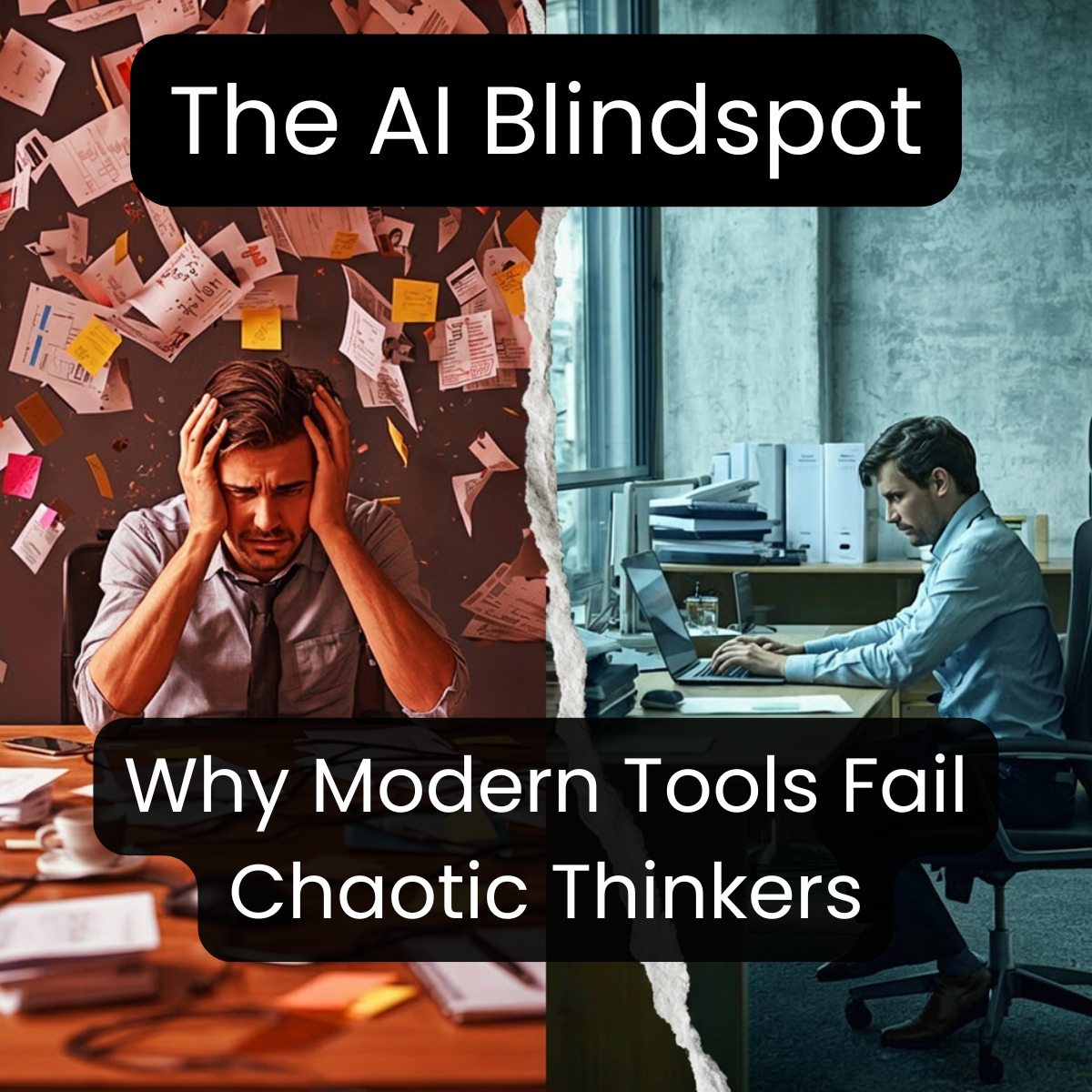
There is an overarching theme everywhere right now.
“What can AI do for you?”
And to be fair, the technology is changing how people work, create, communicate, analyze, and build. People who completely ignore this shift may eventually find themselves struggling to operate in environments that continue advancing without them.
But there is another question people rarely ask.
What can you do for AI?
The machine can only process what you give it.
Many people approach AI like this:
- Chaotic thoughts
- Incomplete direction
- Conflicting objectives
- Poorly structured reasoning
- Undefined goals
Then they expect a flawless strategic outcome.
It does not work that way.
An AI system is a reasoning engine, but it is also an amplifier. The machine processes patterns, direction, structure, and context. If the thinking behind the request is disorganized, the output often reflects that same disorganization at a much faster speed.
Technology does not automatically repair weak diagnostic thinking. It accelerates whatever process already exists.
If the input is noise, the output becomes high-velocity noise.
This is the blindspot many people overlook:
- Better tools do not automatically create better thinking
- Faster systems do not automatically create better judgment
- Advanced technology does not automatically organize confusion
- Automation does not replace structured reasoning
The quality of the thinking process still matters.
This is why two people can use the exact same AI platform and produce completely different outcomes. One person treats the tool like a shortcut. Another uses it as a strategic extension of an already organized thinking process.
The difference is rarely the software itself.
The difference is the structure behind the interaction.
AI responds differently when the thinking behind it becomes more intentional.
People who generate stronger results with AI often begin by organizing their own reasoning first. They define objectives. They identify constraints. They understand the problem they are trying to solve. They provide direction with purpose instead of simply reacting inside the prompt window.
The machine becomes more useful because the thinking process becomes more structured.
If you want stronger AI outcomes, begin by improving:
- How you organize information
- How you define problems
- How you communicate objectives
- How you process complexity
- How you guide the interaction
The tool becomes more effective when the operator becomes more intentional.
Technology can accelerate thinking.
It cannot replace the need to think well.
People often search for better tools while overlooking the condition of the system operating behind the keyboard. The structure of the thinking process still governs the quality of the direction being provided.
If the reasoning process is fragmented, the output often becomes fragmented at scale.
If the thinking process becomes more organized, the technology becomes significantly more useful.
Think better before you prompt better.
Operate UnLOCKed.
Enjoyed this thought? Share it with others.
Share the link below to access other UnLOCKed Thoughts:
Leave a Reply